
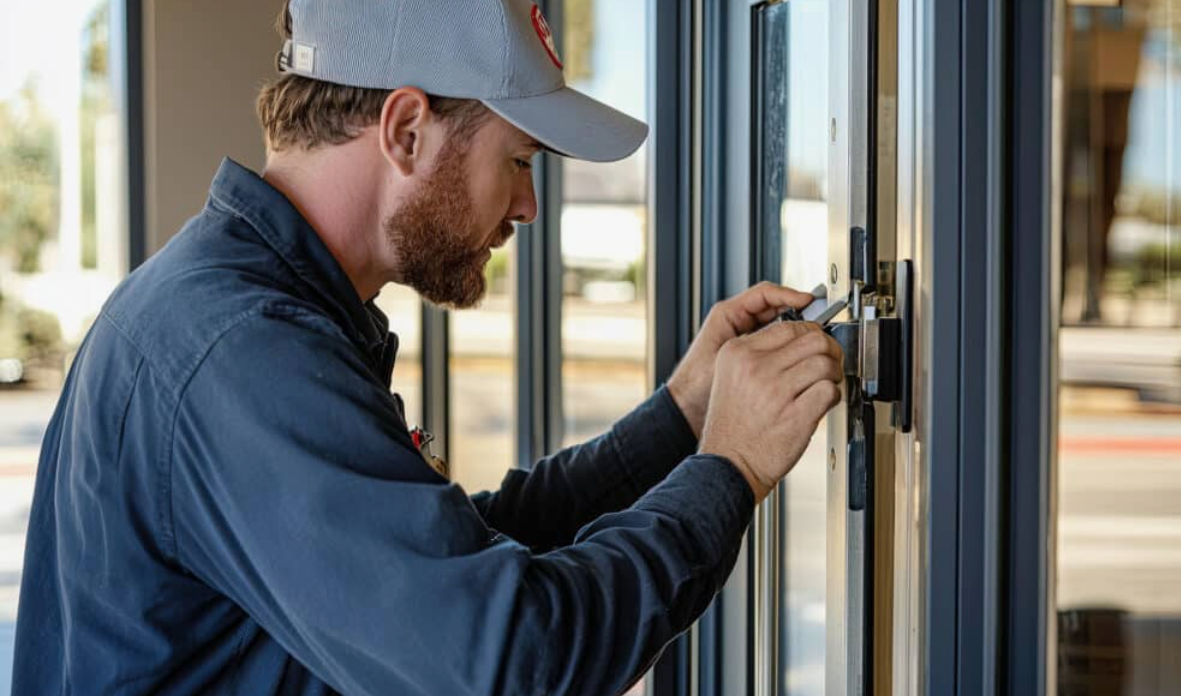
Most building managers think about doors twice. Once on the day they’re installed, and once on the day they fail. Everything in between, the doors just exist as part of the building. They open. They close. Nobody pays attention.
That’s the problem. Commercial doors are mechanical equipment that runs through hundreds of cycles a day, carries safety and code obligations, and sits at the front line of building security. When that equipment goes without scheduled maintenance, the failures pile up in ways that are louder, slower, and more expensive than the maintenance itself would have been.
Commercial door maintenance isn’t a luxury line item. For any building with more than a handful of doors, it’s one of the higher-ROI maintenance programs available.
Why Reactive Maintenance Costs More
The math on door maintenance is straightforward. A scheduled inspection visit on a building catches small issues before they become full failures. A reactive call after something breaks costs more, takes longer, and often comes with collateral damage.
Emergency Call Premium
An after-hours emergency call to fix a storefront door that won’t lock at 9 PM costs two to three times what a scheduled visit during business hours would have cost. Add weekend or holiday premiums and the gap widens. Multiply that across a year of unplanned failures and the budget impact is real.
Collateral Damage from Neglected Issues
A closer that’s been losing fluid for months doesn’t just fail one day. It also damages the frame as the door slams shut harder and harder over weeks. The frame work that follows can cost more than the closer itself. Services like Atlantic Door Repairs see this pattern constantly: small issues that turn into bigger ones because nobody flagged them in time.
Business Disruption
A loading dock door stuck open during a Halifax snowstorm isn’t just a repair bill. It’s a building heating cost, a security concern, and an operations problem all at once. Reactive maintenance puts these scenarios on the table regularly. Scheduled maintenance keeps them rare.
Inside a Maintenance Visit
A standard commercial door maintenance visit hits several items per opening.
Hardware Inspection
The tech checks every piece of hardware on the door. Hinges, closers, latches, panic bars, electric strikes, locks, and exit devices all get tested for proper function. Loose fasteners get tightened. Worn components get flagged.
Operation Testing
The door gets cycled multiple times, tested under load (with weight against it), and tested for self-closing function. Fire doors get a specific self-closing test required by code.
Weather Seal & Gasket Check
Weatherstripping along the frame and gaskets around fire doors get inspected for cracks, compression, and gaps. Failed seals get noted and either replaced on the spot or scheduled.
Lubrication
Hinges, closers, locks, and any moving parts get lubricated with the right product for the application. This single step extends the life of hardware by years.
Alignment Check
The door is checked for square, swing, and proper latching. Drift, drag, or misalignment gets flagged before it leads to frame damage.
Documentation
A written report covers what was inspected, what was repaired, and what needs follow-up. Companies like Atlantic Door Repairs document each opening individually, which makes it easier to track patterns across a building over time.
Recommended Frequency
Most commercial buildings benefit from a twice-yearly inspection program. Spring and fall visits make sense for a few reasons.
- Spring catches winter damage (cold-stressed springs, ice-damaged seals, frost-shifted frames)
- Fall preps the building for winter (lubrication, seal replacement, opener checks)
- Twice-yearly cadence catches most issues before they become failures
- The cost spreads evenly through the year
High-traffic buildings (hospitals, schools, grocery stores) sometimes go quarterly. Buildings with mostly low-use doors might stretch to annual visits. The cadence should match how hard the doors work.
Code & Insurance Considerations
Fire-rated doors in Nova Scotia commercial buildings carry annual inspection requirements under NFPA 80 if the building was built or renovated to those standards. The inspection covers door condition, hardware function, gasket integrity, and label legibility.
A documented maintenance program covers this requirement. Buildings without one sometimes find themselves scrambling to pass inspection or, worse, facing insurance complications after an event. An inspector who asks for service records gets a different conversation depending on what’s in the file.
Atlantic Door Repairs and similar providers across the region include fire door inspections as part of standard commercial maintenance, with documentation formatted for insurance and code review.
Energy Savings Add Up
Commercial buildings lose heat (and cooling) through poorly sealed doors faster than most people realize. A storefront door with failed weatherstripping leaks heated air constantly through winter. A loading dock door with a damaged seal does the same on a larger scale.
A maintenance program that catches and replaces failed seals before they’re catastrophic keeps energy costs down. The payback on weatherstripping replacement is often a single season for high-traffic doors in cold weather.
Security & Operations Tied to Door Condition
A door that doesn’t close fully isn’t secure. A door that slams every cycle damages itself. A door that drifts open between customers leaves a building exposed.
Each of these is a small operational issue that adds up. Staff have to manually close doors. Customers walk into a draft. Security cameras pick up doors hanging open after hours. None of these are catastrophic on their own. All of them point to maintenance gaps that build over time.
Picking a Maintenance Provider
A few markers separate solid commercial maintenance providers from the rest.
- They walk every door at the first visit and build a baseline document
- They use consistent reporting formats so visit-to-visit comparisons are easy
- They flag issues before they become urgent, not after
- They handle the work in-house rather than subcontracting parts
- They schedule visits on a calendar so nothing slips
Local providers like Atlantic Door Repairs that serve the Halifax region across multiple commercial accounts tend to develop deep familiarity with the area’s specific weather patterns and the failure modes they cause. That regional knowledge shows up in the maintenance reports.
A commercial building with a real maintenance program in place runs quieter, costs less to operate, and doesn’t generate the kind of midnight phone calls that come from neglected hardware. The investment is small compared to the cost of letting doors fail on their own schedule.