
Bringing a baby into the world is often described as one of life’s most joyful experiences. However, for many new mothers, the postpartum period can also bring unexpected emotional challenges. While postpartum depression is widely discussed, postpartum anxiety symptoms are just as common—and often overlooked. Understanding the signs of postpartum anxiety is essential for early recognition, support, and recovery.
This article explores what postpartum anxiety is, how it differs from typical new-parent worry, the most common symptoms, and what steps can help mothers manage and overcome it.
What Is Postpartum Anxiety?
Postpartum anxiety is a mental health condition that affects women after childbirth. It involves excessive worry, fear, or tension that feels difficult to control and interferes with daily life. Unlike normal concerns about a newborn’s health and safety, postpartum anxiety is more intense, persistent, and often irrational.
While it can occur alongside postpartum depression, postpartum anxiety can also appear on its own. Many women experience symptoms within the first few weeks after delivery, but it can also develop months later.
Understanding postpartum anxiety symptoms is important because early recognition can lead to faster recovery and better emotional well-being for both mother and baby.
Common Postpartum Anxiety Symptoms
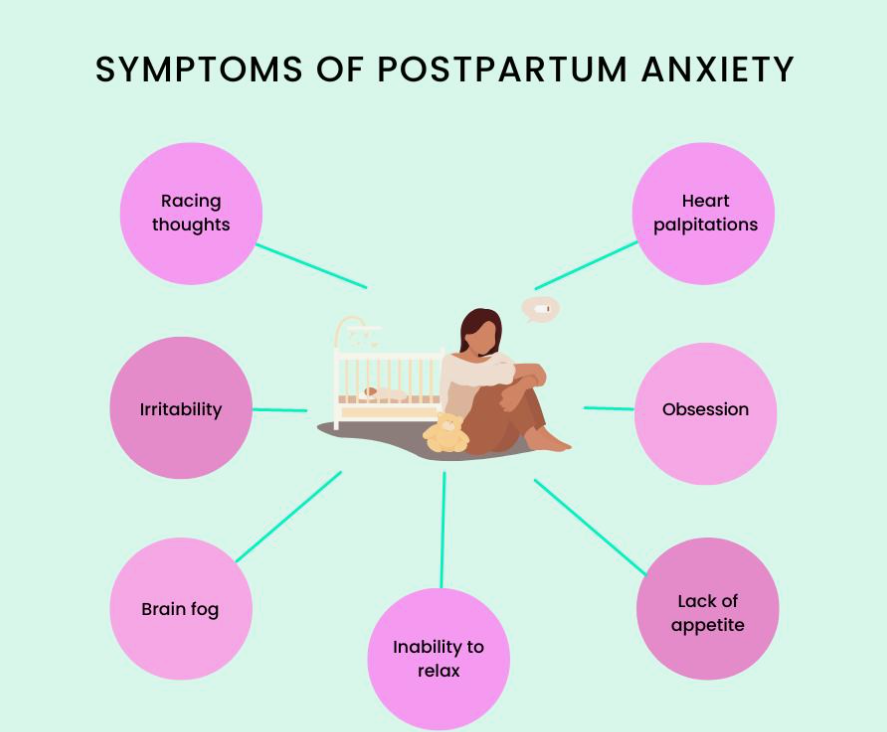
Postpartum anxiety can manifest in both emotional and physical ways. The symptoms may vary from person to person, but some of the most common include:
- Constant or Excessive Worry
One of the most prominent signs of postpartum anxiety is persistent worry that feels uncontrollable. Mothers may constantly fear something bad will happen to their baby, even when there is no clear reason for concern. This worry can extend to health, sleep, feeding, and even simple daily activities.
- Racing Thoughts
Many women describe their minds as “always on.” Thoughts may jump rapidly from one concern to another, making it difficult to relax or focus. This mental overload can feel exhausting and overwhelming.
- Sleep Difficulties
Even when the baby is sleeping, mothers with postpartum anxiety may struggle to fall or stay asleep. This is often due to racing thoughts or the inability to “shut off” worry, leading to chronic fatigue.
- Physical Symptoms
Postpartum anxiety doesn’t just affect the mind—it also impacts the body. Common physical symptoms include:
- Rapid heartbeat
- Shortness of breath
- Dizziness
- Muscle tension
- Nausea or stomach discomfort
These symptoms can sometimes mimic panic attacks.
- Restlessness or Feeling “On Edge”
Many mothers feel constantly alert or unable to relax, as if something bad is about to happen. This heightened state of awareness can make it difficult to enjoy quiet moments or rest.
- Difficulty Concentrating
Focusing on tasks—whether caring for the baby or completing daily chores—can become challenging. The mind may feel scattered or overwhelmed.
- Irritability or Emotional Sensitivity
Small frustrations may feel much larger than usual. Some mothers may also feel unusually sensitive, tearful, or emotionally reactive.
- Avoidance Behaviors
In some cases, anxiety may lead mothers to avoid certain situations, such as leaving the house, allowing others to care for the baby, or even checking on the baby repeatedly out of fear.
Signs of Postpartum Anxiety vs. Normal New Parent Worry
It is completely normal for new parents to worry about their baby’s safety and well-being. However, signs of postpartum anxiety go beyond typical concern.
Normal new parent worry:
- Comes and goes
- Is based on real situations
- Can be reassured by facts or support
- Does not significantly interfere with daily life
Postpartum anxiety:
- Feels constant and uncontrollable
- Often includes irrational fears
- Persists even when reassurance is given
- Interferes with sleep, bonding, or daily functioning
Understanding this difference helps mothers recognize when professional support may be needed.
Causes and Risk Factors
There is no single cause of postpartum anxiety. It often results from a combination of physical, emotional, and environmental factors, including:
- Hormonal changes after childbirth
- Lack of sleep and exhaustion
- Previous history of anxiety or depression
- Stressful life events or lack of support
- Difficult pregnancy or birth experience
- High expectations of motherhood
It is important to remember that postpartum anxiety is not a sign of weakness or failure. It is a medical condition that can affect anyone.
How Postpartum Anxiety Affects Daily Life
If left unaddressed, postpartum anxiety can impact many areas of a mother’s life. It may interfere with bonding with the baby, reduce enjoyment of motherhood, and increase feelings of guilt or inadequacy.
Some mothers may feel pressure to appear “fine” on the outside while struggling internally. This can lead to isolation and make symptoms worse over time.
Recognizing postpartum anxiety symptoms early helps prevent these challenges from becoming more severe.
Coping Strategies and Treatment Options
The good news is that postpartum anxiety is highly treatable. Many women recover fully with the right support and care.
- Talk to a Healthcare Provider
A doctor, midwife, or mental health professional can assess symptoms and recommend appropriate treatment options.
- Therapy and Counseling
Cognitive-behavioral therapy (CBT) is commonly used to help mothers manage anxious thoughts and develop healthier thinking patterns.
- Support Groups
Connecting with other new mothers can reduce feelings of isolation and provide reassurance that others are experiencing similar challenges.
- Medication (If Needed)
In some cases, medication may be recommended to help regulate anxiety levels. This is always discussed carefully between the patient and healthcare provider.
- Rest and Self-Care
Although difficult with a newborn, rest is crucial. Even short breaks, naps, or moments of relaxation can help reduce symptoms.
- Practical Support
Accepting help from family or friends—whether for childcare, meals, or chores—can significantly reduce stress levels.
- Mindfulness and Breathing Techniques
Simple breathing exercises, meditation, or grounding techniques can help calm the nervous system during moments of intense anxiety.
When to Seek Help
It is important to seek professional help if:
- Anxiety feels overwhelming or constant
- You are unable to sleep even when the baby sleeps
- You experience panic attacks
- You feel unable to care for yourself or your baby
- Symptoms persist for more than two weeks or worsen over time
Early support can make recovery faster and easier.
Final Thoughts
Experiencing postpartum anxiety symptoms does not mean you are failing as a mother. It is a common and treatable condition that affects many women during the postpartum period. Recognizing the signs of postpartum anxiety is the first step toward healing.
With proper care, support, and understanding, mothers can recover and fully enjoy the experience of bonding with their newborns. If you or someone you know is struggling, reaching out for help is a strong and important step toward wellness.