
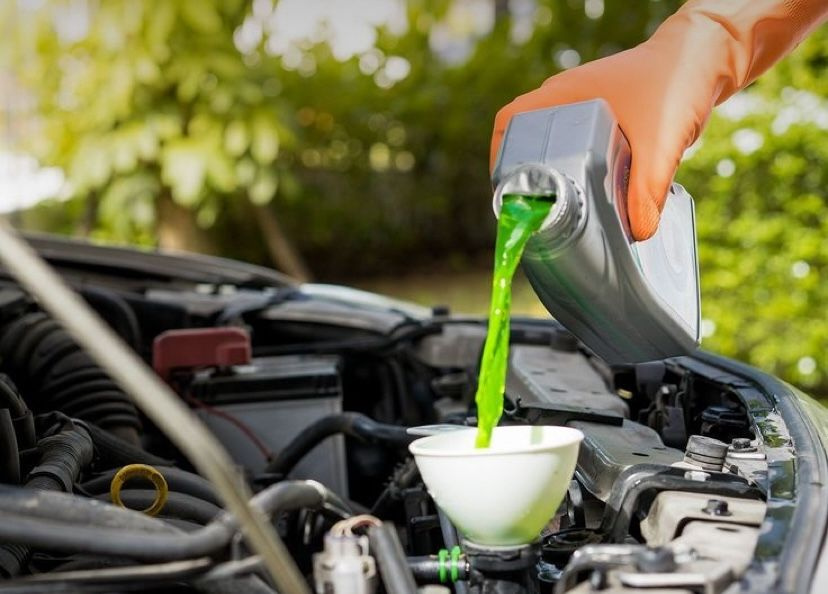
One of the most important components that prevent your engine from overheating in the summer and freezing in the winter is the radiator fluid, which is often referred to as antifreeze or coolant. The radiator is responsible for dispersing the heat that is absorbed by the colorful liquid that circulates through your engine. Do you ever find yourself curious about the meaning behind the various hues of radiator fluid? The question is, what causes the color to shift over time?
A Look At The Chemistry Behind Coolant
The fluid that makes up radiators is not simply colored water. It is meant to resist high temperatures and prevent corrosion; it is a sophisticated blend of chemicals meant to safeguard your engine. Ethylene glycol, a form of alcohol with a high boiling point and a low freezing point is the primary component of the majority of coolants for thermal management. Water, dyes, and chemicals that hinder corrosion are also included in the list of components.
It is important to note that the coolant’s particular color is due to dye. However, these colors are not just for aesthetic purposes. One practical purpose is to help you determine the sort of radiator fluid container present in your vehicle and whether or not it is necessary to replace it.
The Color Code
Listed below is a more in-depth examination of the most popular coolant colors, along with headings:
Green Coolant
In the world of automobiles, green coolant is a well-known and widely used product that is familiar to the majority of car owners. Generally speaking, it has to be refreshed every 30,000 miles or two years because it is developed using inorganic acid technology (IAT). Its shorter lifespan implies that it requires more regular maintenance despite its effectiveness.
Yellow Coolant
Yellow coolant, which is similarly based on IAT, has similar characteristics to its green sibling. On the other hand, compared to conventional green coolants, it often has a longer lifespan and provide a greater degree of overall protection.
Orange Coolant
Orange coolant is an example of a technological advancement in coolant technology. It uses organic acid technology (OAT). This composition offers a considerable increase in longevity, often maintaining its effectiveness for up to 150,000 miles or five years. Because of its long lifespan, many people who own vehicles find it handy.
Red Coolant
The composition of red car radiator flushing fluid can be slightly different from that of orange coolant, despite the fact that both coolants fall within the generic category of OAT. To ensure compatibility and get the best possible performance, it is essential to review the handbook that came with your car.
Pink Coolant
Pink coolant is primarily an OAT coolant for select European and Asian automobiles. It was designed with certain car models in mind and is primarily designed for use with such vehicles. This product’s composition is unique, catering to the particular needs and requirements of these automobile makers.
Blue Coolant
The blue coolant is a hybrid OAT formulation that bridges the gap between green and orange coolant technology. Its compatibility with both types provides versatility and simplicity, particularly for automobiles that may have previously used coolants of a different type.
Purple Coolant
OAT technology has advanced to the point that purple coolant, the newest child on the block, represents the cutting edge. It provides the longest protection of any of the OAT coolants, therefore minimizing the frequency with which it must be changed and extending the amount of time that one may have peace of mind.
Why Does Coolant Change Color?
The following are some of the variables that might cause coolant to exhibit a change in color over time:
- contamination: the coolant can undergo a color change as a result of the presence of rust, debris, or other impurities.
- Breakdown of the additives: Over time, the additives in the coolant can undergo a chemical breakdown, which can cause the coolant to lose its efficacy and change color.
- Mixing different kinds of coolants: When coolants with different chemical compositions are mixed together, the result might be a murky brown color and a decrease in the coolant’s performance characteristics.
When to Change Your Coolant
It is imperative that you change your coolant according to the instructions provided by your vehicle’s manufacturer. If you use a coolant that is either outdated or polluted, it can result in engine overheating, corrosion, and expensive repairs.
To determine whether or not your coolant needs to be replaced, here are several signs:
- discoloration: whether it is brown, rusty, or has a murky look, it is now time to replace it.
- Low coolant level: Coolant level that is regularly low: If the coolant level in your reservoir is consistently low, you may have a leak, or your coolant may be breaking down.
- Sweet smell: A pleasant odor indicates that there may be a leak in your vehicle’s engine coolant system.
- Engine overheating: If your engine constantly overheats, this might indicate an issue with the coolant.
The Right Coolant Choice
When it comes time to replace your radiator cleaner fluid, it is essential to select the type appropriate for your vehicle carefully. You may establish the right coolant color and specs by consulting with a professional or the owner’s handbook that came with your vehicle.
Misusing coolant can harm your vehicle’s engine and cooling system. For instance, if you use green coolant in a vehicle that requires orange coolant, you risk corrosion and early failure of the water pump seals.
DIY or Professional Service?
If you have some fundamental mechanical knowledge, changing the coolant for your vehicle is a pretty simple chore that you can perform on your own. It is recommended, however, that you leave the maintenance of your vehicle to a qualified technician if you do not feel confident working on it. Another thing to look for is the radiator coolant price in warm places like the UAE.
Radiator fluid is more than simply a colorful liquid; it serves various purposes. This is an essential component that ensures that your engine continues to operate smoothly and effectively. When you have a thorough grasp of the many coolant colors and what each one represents, you will be able to guarantee that your vehicle will remain cool and safe regardless of the challenges that the road provides.